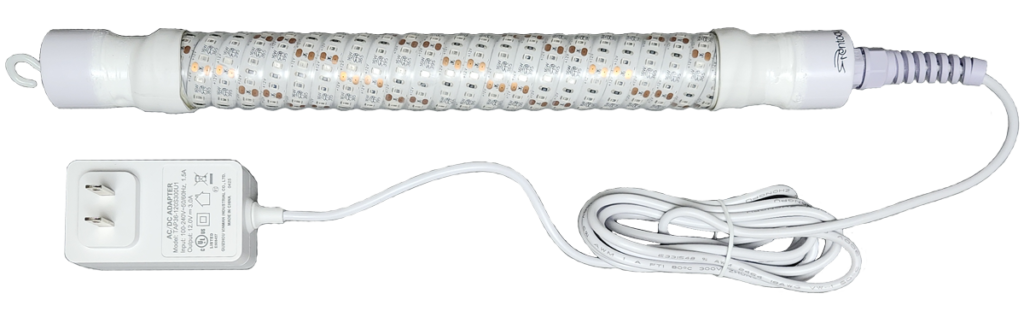
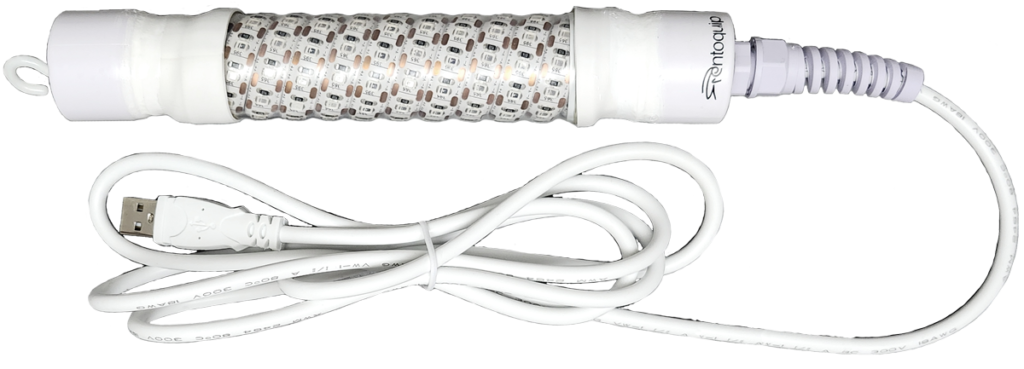
Operates from outlets, generators, or portable power stations
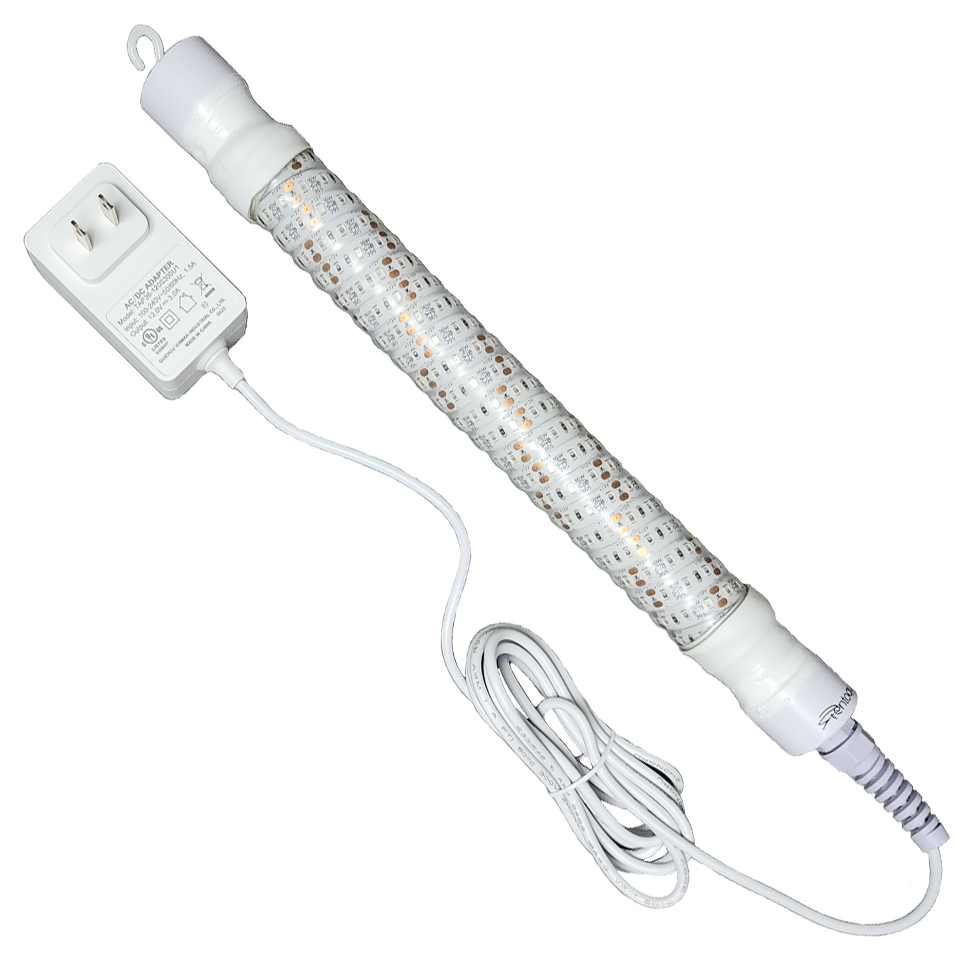
Professional LED UV blacklight for nocturnal insect work
Trusted by researchers and naturalists
Used for collecting, observation, and photography
Attracts moths, beetles, and other nocturnal insects
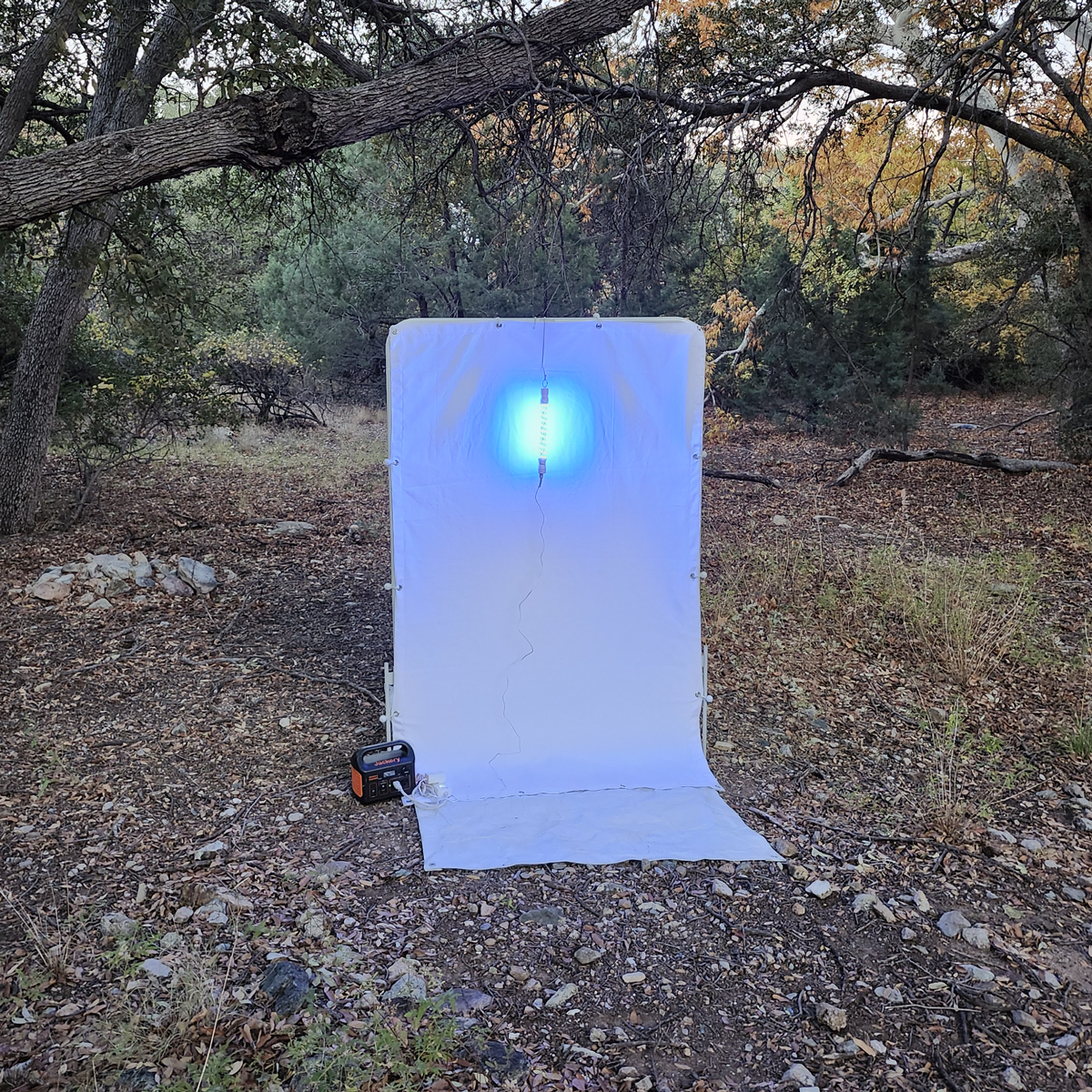
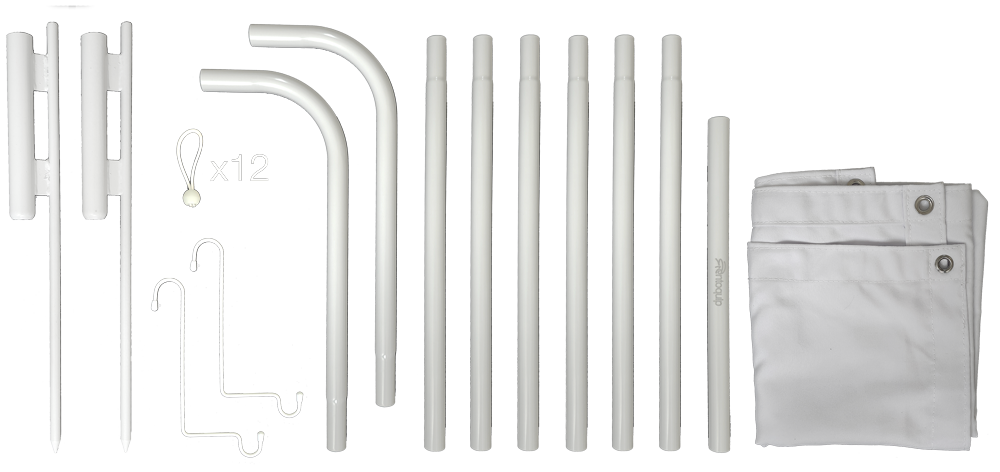
Designed for light sheets, traps, and field setups
Rugged, weather-resistant construction
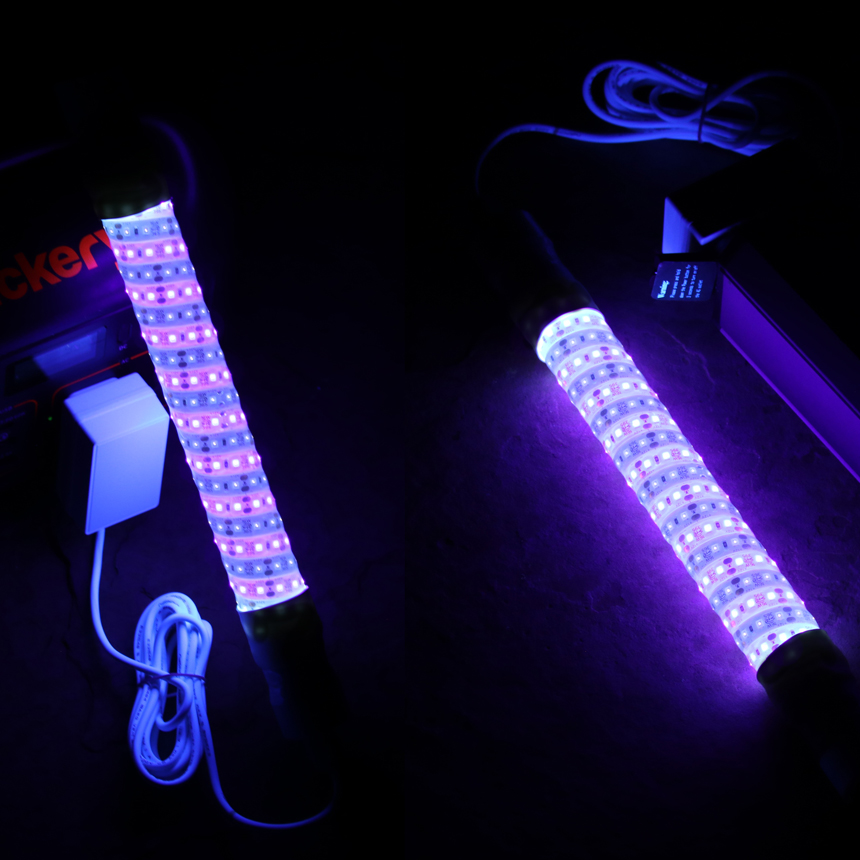
Dual UV output (365 nm + 395 nm)
Operates from AC outlets (portable power stations)
What to expect in the field
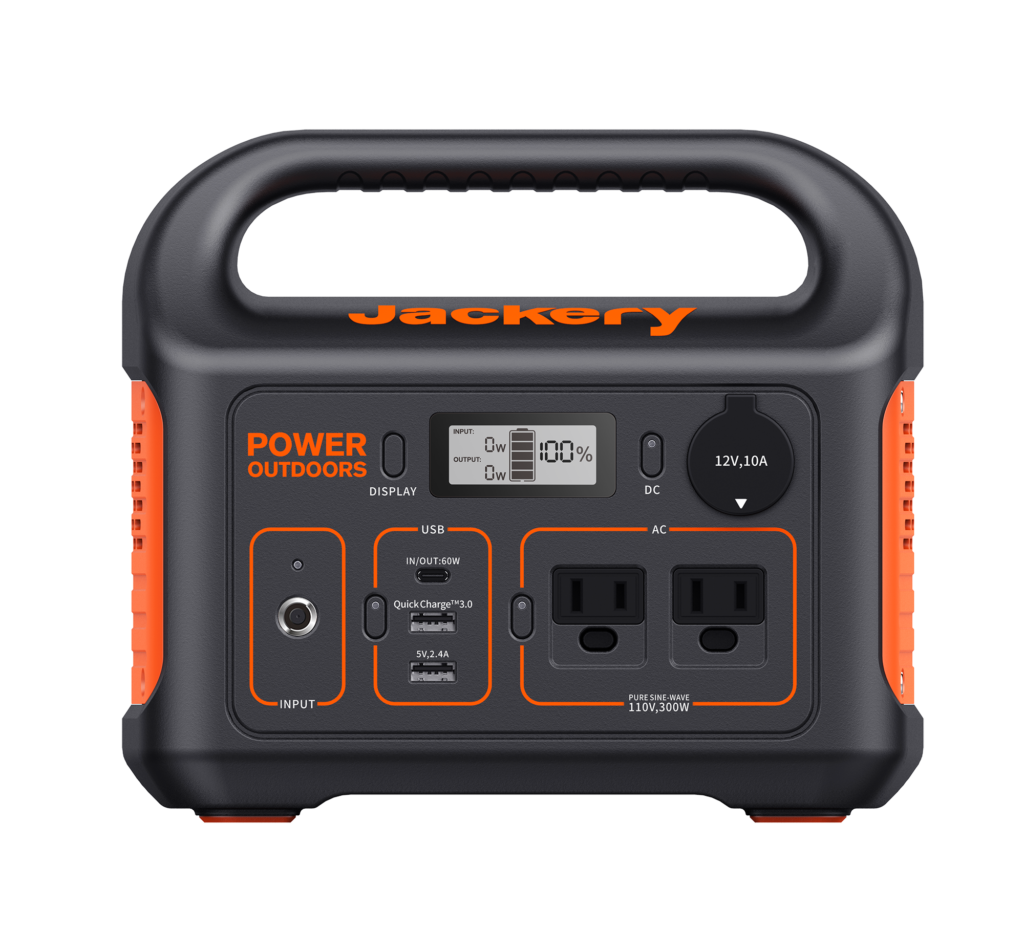
Many users run Entoquip lights from portable power stations. For example, the Jackery Explorer 300 typically powers two lights for ~4 hours. Larger power station models are available for longer run times.
Independent testing shows modern LED UV performs comparably to traditional fluorescent UV sources. View research →
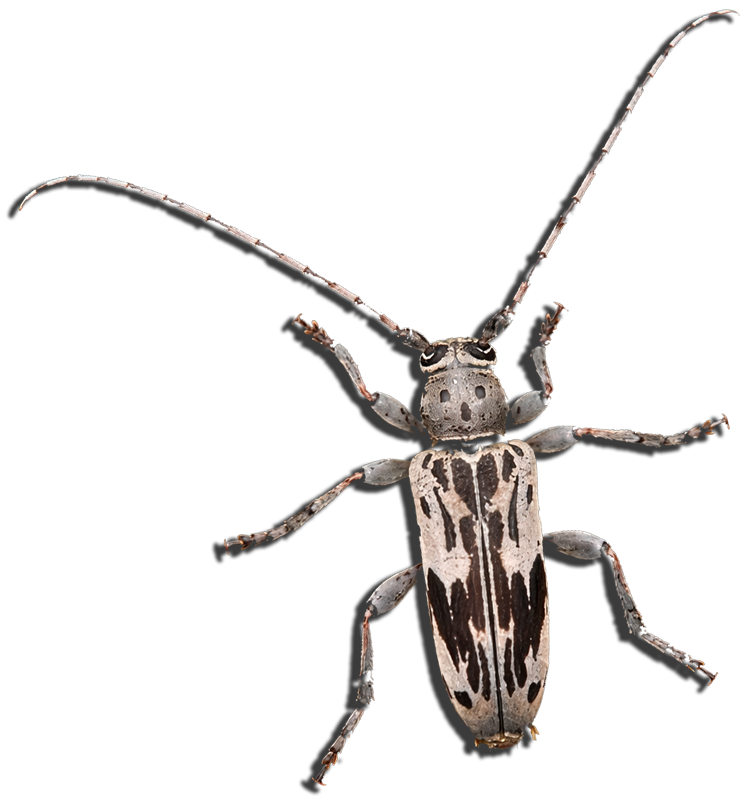
Tigrinestola tigrina
Tigrinestola tigrina
T. tigrina
The Moon, UV-A, and Insect Orientation
How UV-A light influences night-flying insects
The Moon, UV-A, and Insect Orientation
How UV-A light influences night-flying insects
Night-flying insects orient using distant celestial light sources, particularly the moon and UV-rich night sky, and are most sensitive to UV-A wavelengths (315–400 nm). Artificial UV-A lights act as closer orientation cues, disrupting navigation and causing circling and frequent landings near the light, especially on moonless nights. Advances in LED technology enable emission at 365 nm and 395 nm, which Entoquip lights combine for broad UV-A coverage.
The Moon
365nm LED
wavelength (nm)
395nm LED
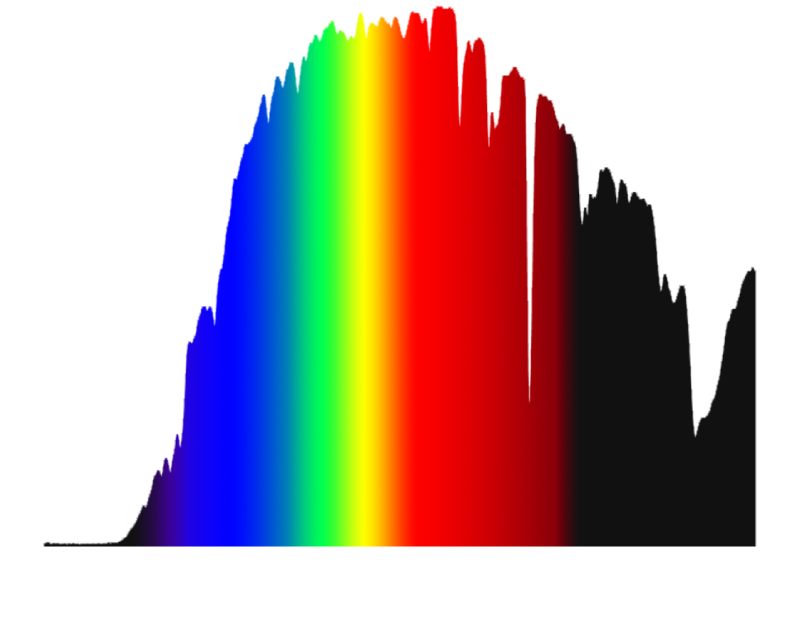
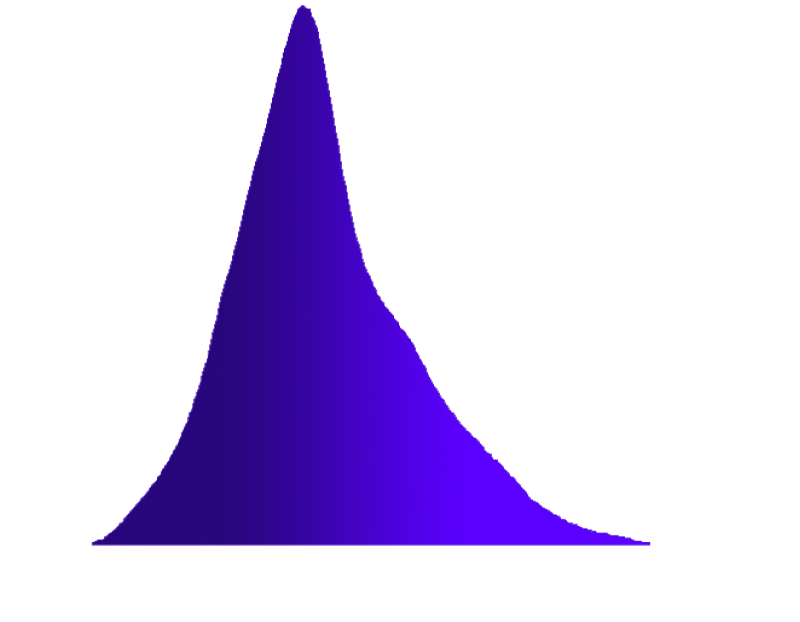
The spectra below compare moonlight with 365 nm and 395 nm UV-A LEDs. Click to expand
Moonlight spectrum
wavelength (nm)
365 nm LED
wavelength (nm)
395 nm LED
wavelength (nm)
Specifications
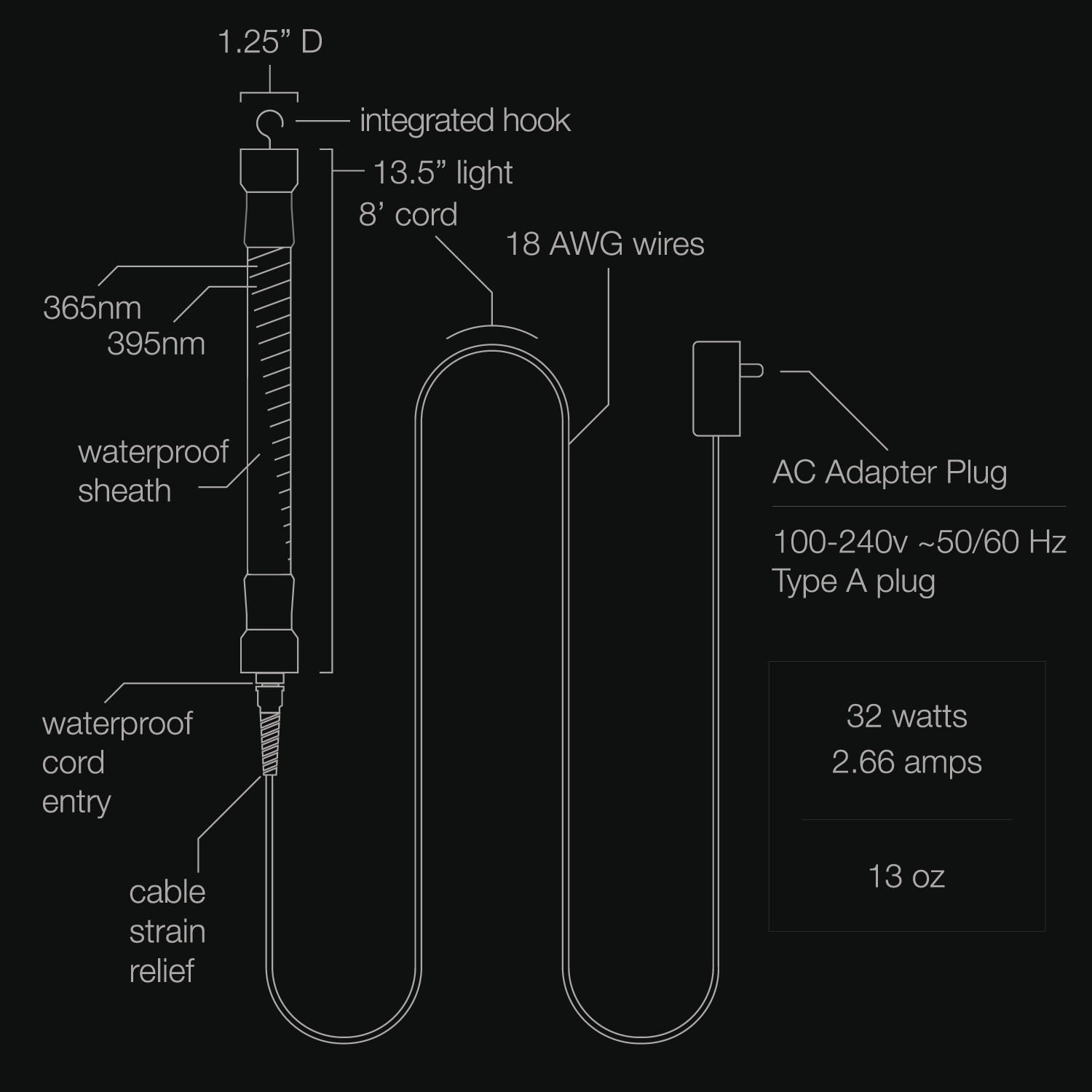
Power: 32 W
Current: 2.66 A
LED count: 240
Wavelengths: 365 nm + 395 nm
Input: AC 100–240 V, 50/60 Hz (Type-A plug)
Output voltage: 12 V DC
Cord length: 8 ft
Cord strain relief: Reinforced
Wire gauge: 18 AWG
Core material: Aluminum
Mounting: Integrated hook
Construction: Weather-resistant
Weight: 13 oz
Overall length: 14 in (including hook)
Illuminated length: 8.75 in
Assembly: Assembled in USA
UV
Entoquip lights emit wavelengths within the long-wave ultraviolet range. These wavelengths are naturally present in outdoor light, and the emitted intensity is lower than direct daytime sunlight. As with any bright light source, avoid looking directly at the LEDs. UV-filtering eyewear may be used for added comfort during prolonged use.
Heat
Entoquip lights use a high density of LEDs, which means they will get hot to the touch during operation. Surface temperatures typically reach 140–150°F (60–66°C) depending on ambient conditions. This is normal for high-power LED systems. Avoid handling the light while it is running and allow it to cool before repositioning.
We use cookies to ensure that we give you the best experience on our website. If you continue to use this site we will assume that you are happy with it.